

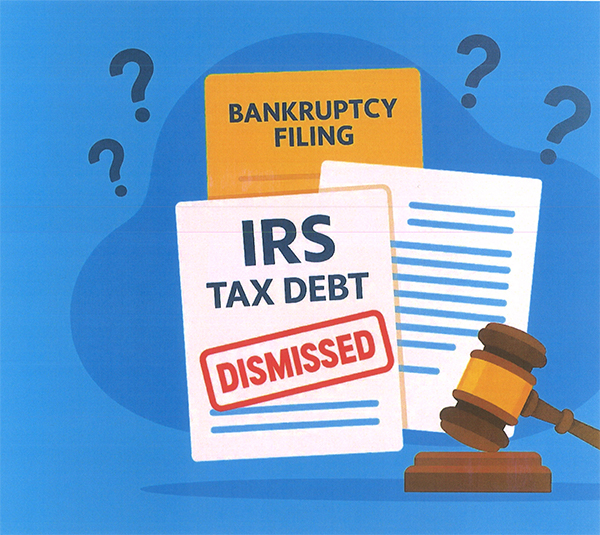
The Bitter Sweet Fresh Start: Does a Federal Tax Lien Survive Bankruptcy?
Filing for bankruptcy is supposed to grant a total financial fresh start. For many people drowning in unsecured liabilities, a successful discharge provides exactly that. However, if your outstanding debt includes unpaid federal income taxes, you might run into a very complicated—and stressful—legal paradox.
The short answer is yes: a properly recorded federal tax lien generally survives bankruptcy. Even if the court legally wipes away your personal obligation to pay the tax debt, the lien remains firmly attached to the property you owned before you filed.
Understanding the critical distinction between your personal liability and the IRS’s claim on your assets is vital to navigating life post-bankruptcy.
In Personam vs. In Rem: The Two Essential Concepts
To understand why the IRS can still hold a claim over your property after bankruptcy, you have to break down “tax debt” into two separate legal concepts:
Your Personal Liability (In Personam): This is your personal obligation to pay the money you owe.
The Property Claim (In Rem): This is the government’s legal claim against your actual property (such as your home, land, or vehicles).
When you complete a Chapter 7 bankruptcy, a successful discharge eliminates your personal liability for qualifying older income taxes. This means the IRS cannot legally garnish your future wages, levy your post-bankruptcy bank accounts, or sue you personally.
However, according to official IRS Publication 908 (Bankruptcy Tax Guide), the discharge does not erase a valid lien against assets you owned when you filed your bankruptcy petition. The in rem claim rides straight through your bankruptcy untouched.
How Different Bankruptcy Chapters Handle Tax Liens
How a tax lien behaves depends heavily on which type of bankruptcy you choose.
| Feature / Impact | Chapter 7 Bankruptcy | Chapter 13 Bankruptcy |
| Primary Mechanism | Liquidation of non-exempt assets. | A 3-to-5-year structured repayment plan. |
| Personal Liability | Wiped out entirely for qualifying old income taxes. | Eliminated after successfully completing the plan. |
| What Happens to the Lien? | Survives and remains attached to all pre-petition assets. | Can be paid off or reduced over time through the plan. |
| Future Property | Exempt from the pre-existing lien. | Protected while under the bankruptcy court’s plan. |
Chapter 7: The Lien “Rides Through”
If you own a home or property and file Chapter 7, the tax lien remains secured by that property. If you choose to keep your home, the lien will wait quietly in the background. If the value of your property grows, or you build up equity by making your monthly mortgage payments, the IRS lien automatically fastens onto that new equity. You cannot sell or refinance your home down the road without satisfying that lien from the proceeds.
Chapter 13: A Route to Resolution
Chapter 13 provides an active strategy to defeat or diminish a tax lien. Because it utilizes a structured repayment plan, you can funnel money toward paying down the secured portion of the tax debt. In some instances, if the tax debt exceeds the actual market value of your property, your attorney can argue to pay the lien only up to the value of your assets, reclassifying the remaining balance as unsecured. Once the plan concludes and the secured amount is paid off, the IRS will release the lien.
Options for Dealing with a Surviving Lien
If you have already received a Chapter 7 discharge and are stuck with a surviving federal tax lien, you still have structural options:
Wait Out the Statute of Limitations: Federal tax liens do not last forever. Generally, they expire 10 years from the date the tax was originally assessed. If you do not plan on selling your home anytime soon, you can let the lien sit until the collection clock runs out. Keep in mind that filing for bankruptcy pauses this clock, extending the 10-year deadline.
Negotiate an Offer in Compromise (OIC): You can approach the IRS post-discharge to negotiate a settlement. Because your personal liability is gone, the IRS’s collection power is strictly limited to the equity of the assets you owned at filing. If your “stuff” is worth very little, the IRS may accept a much smaller cash offer to clear the lien.
Request a Lien Subordination or Discharge: If you need to refinance your mortgage or sell your property, you can apply for a certificate of discharge or subordination. This allows a new lender to jump ahead of the IRS in line, or allows the property to be sold cleanly as long as the IRS gets its share of the equity from the closing table.
The Bottom Line
A federal tax lien is one of the most powerful collection tools in the government’s arsenal, and it doesn’t vanish just because a bankruptcy judge signs a discharge order. While bankruptcy can successfully protect your paycheck and bank accounts from future IRS levies, it cannot automatically strip a valid security interest away from your home or property.
If you are dealing with a tax lien, navigate these timing rules and asset valuations with the experienced legal team at Jacoby and Jacoby. Contact us today at 631-289-4600 for a free consultation to ensure your “fresh start” doesn’t come with unnecessary baggage.